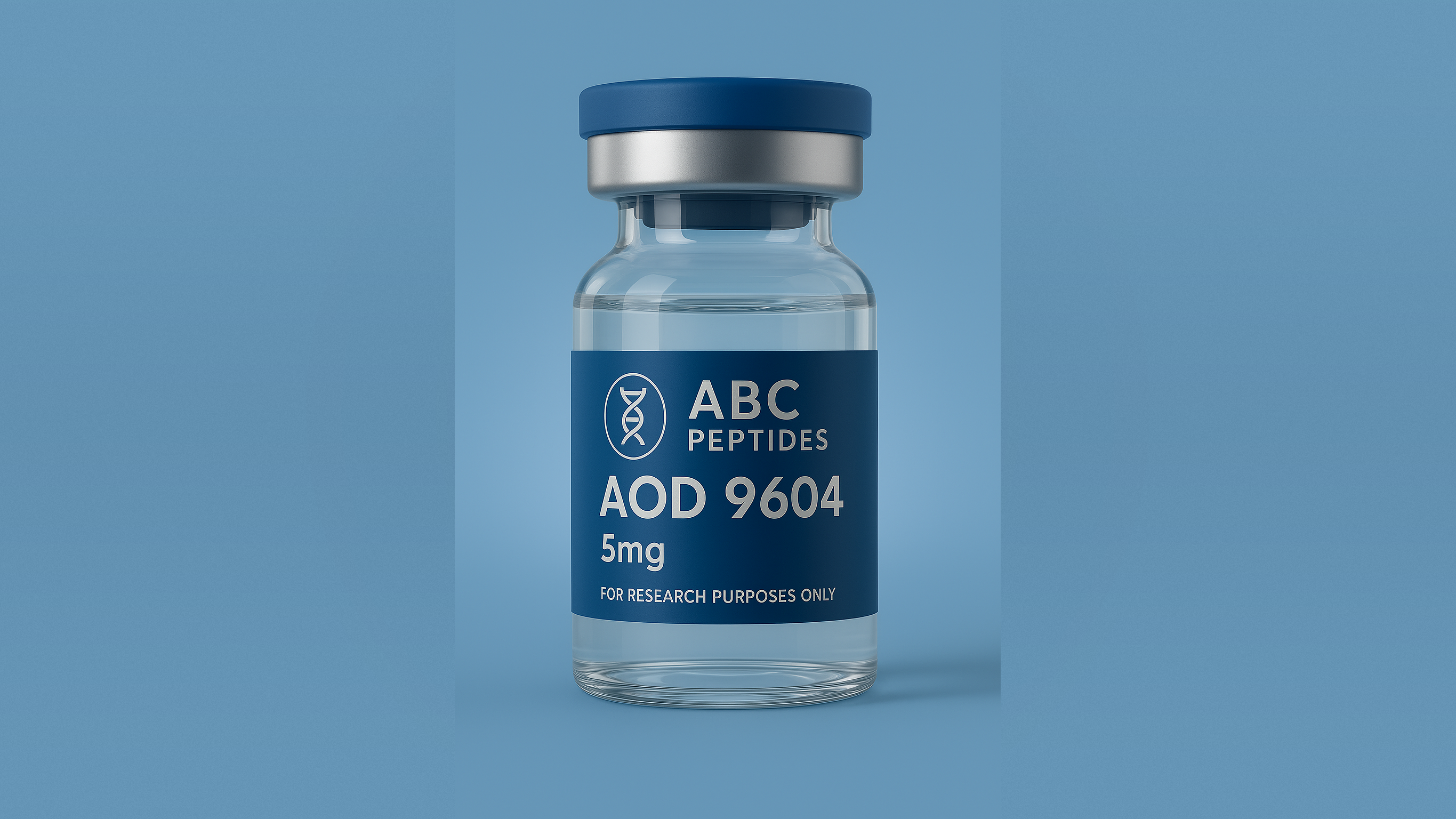
Description
AOD 9604 (Research Use Only)
AOD 9604 is a synthetic peptide fragment studied in research settings for its relationship to growth hormone (GH) signaling pathways and metabolic regulation. It is commonly explored in laboratory models focused on lipid metabolism, adipose tissue biology, and cellular signaling related to energy balance. Researchers select AOD 9604 as a tool peptide when investigating mechanisms that may influence fat metabolism markers without directly studying full-length growth hormone activity.
Research Applications & Study Interest
AOD 9604 is typically used in in vitro and preclinical research contexts to evaluate:
-
Adipose tissue signaling: Exploring peptide-driven changes in adipocyte behavior and lipid-handling pathways
-
Lipid metabolism markers: Assessing experimental readouts associated with fat storage and breakdown (model-dependent)
-
Metabolic pathway activity: Observing downstream signaling related to energy utilization and substrate partitioning
-
Cellular assays in metabolic research: Studying effects on gene/protein expression markers tied to lipid transport and metabolism
-
Peptide signaling characterization: Stability, receptor interaction hypotheses, and pathway mapping in controlled models
Mechanism of Research Interest (High-Level)
AOD 9604 is derived from a region of the human growth hormone sequence that has been studied for potential involvement in lipolytic (fat metabolism) signaling. In research environments, it may be used to explore:
-
Pathways associated with lipid mobilization
-
Signaling changes in adipocytes
-
Experimental biomarkers related to metabolic regulation
Observed effects can vary significantly depending on the study design, model type, assay selection, and handling.
Typical Research Formats
-
Often supplied as a lyophilized powder to support precise laboratory preparation
-
Researchers may confirm identity and purity using standard analytical methods such as HPLC/LC-MS based on protocol requirements
Reviews
There are no reviews yet.